MAD / 04 — Asnago e Vender
Casa Asnago e Vender
A window onto the archaeological park, to feel part of history.
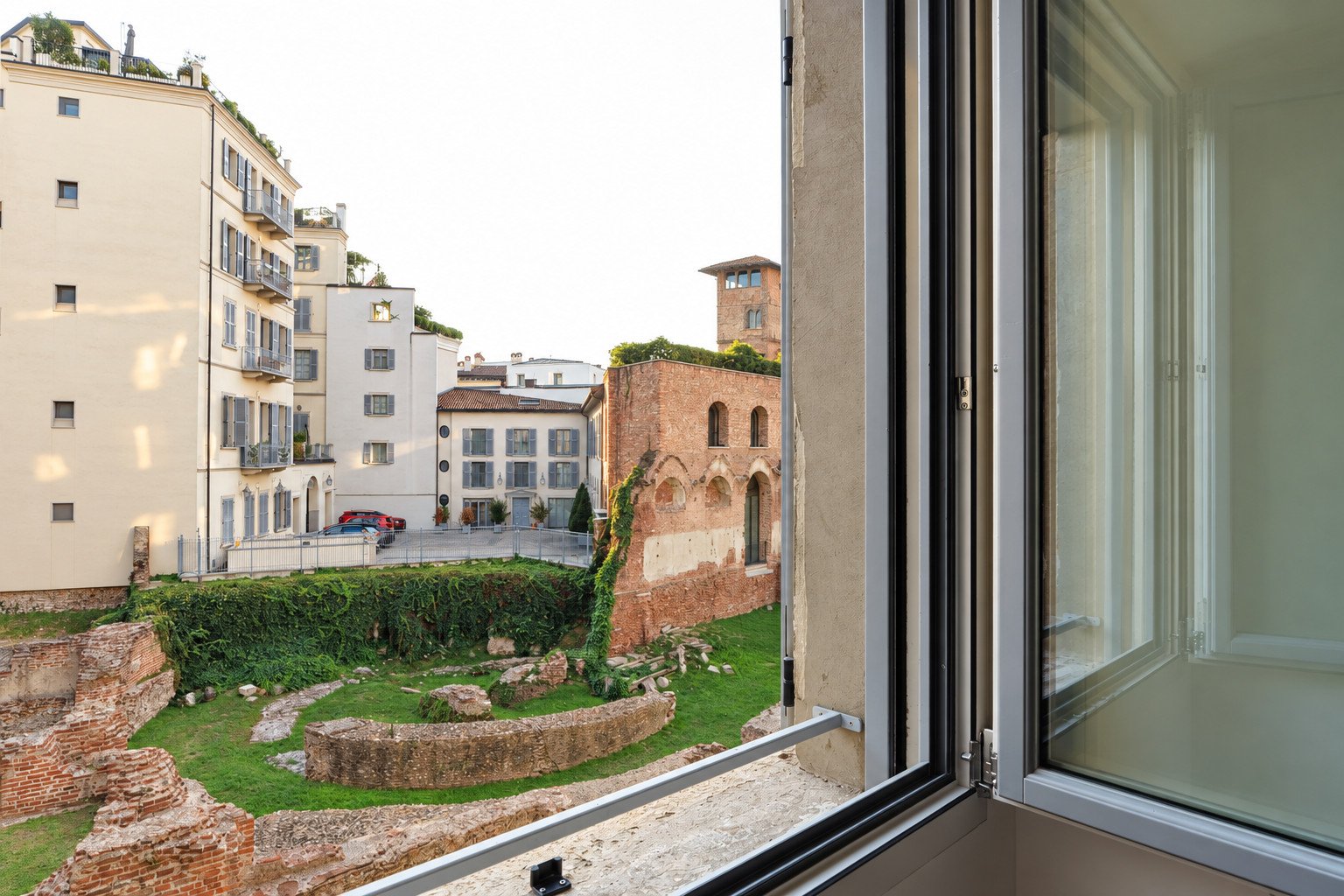
A window onto the archaeological park, to feel part of history.
01 Gallery
02 Amenities
 Self check-in
 Wi-Fi
 Coffee corner
 Cleaning
 Wardrobe
 Assistance
 Stay support
 Central location
Main amenities available on request or to be confirmed.
03 The building
Amid Roman stones, medieval towers and more recent architecture, here one can quite literally live at the heart of Milan’s history.
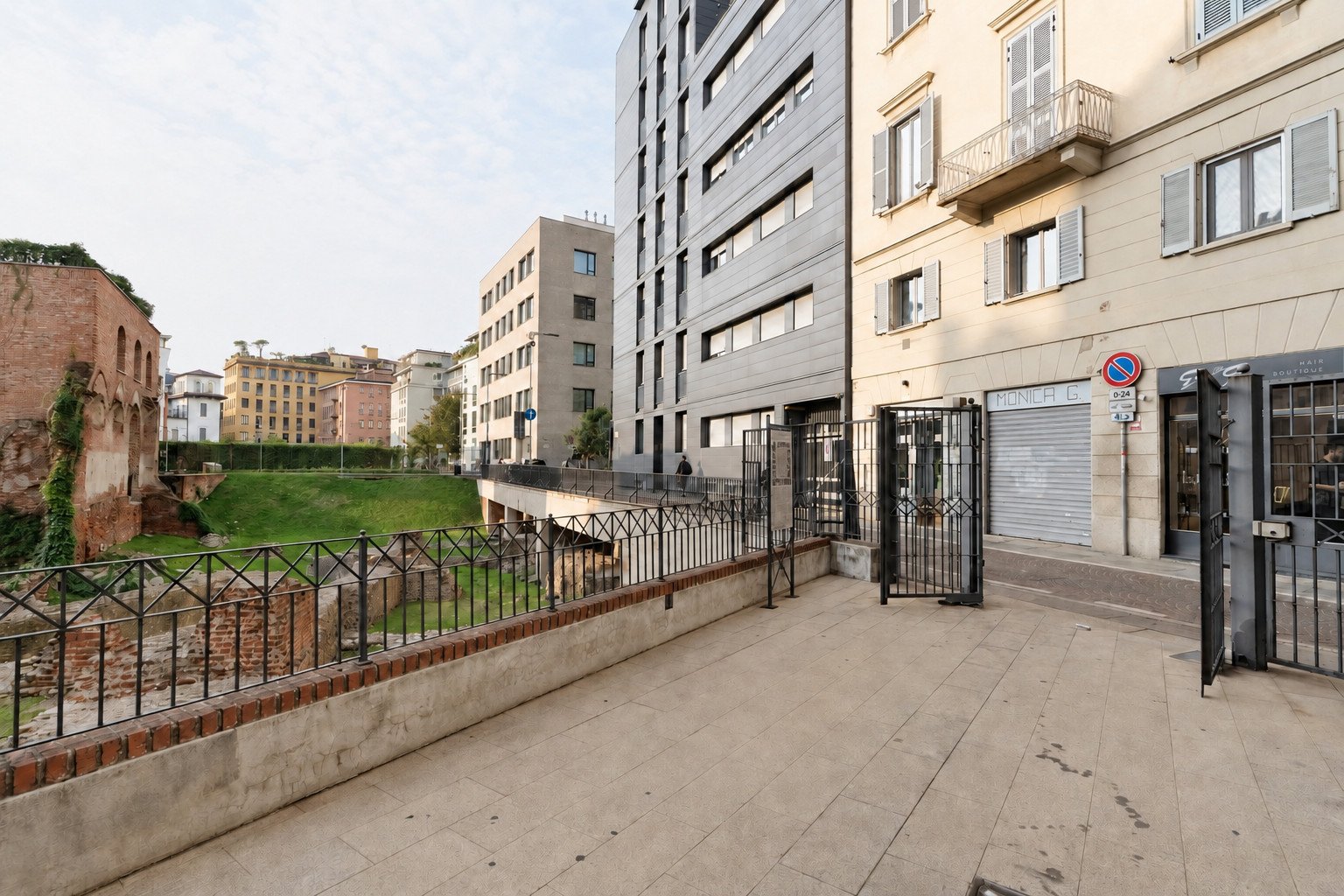
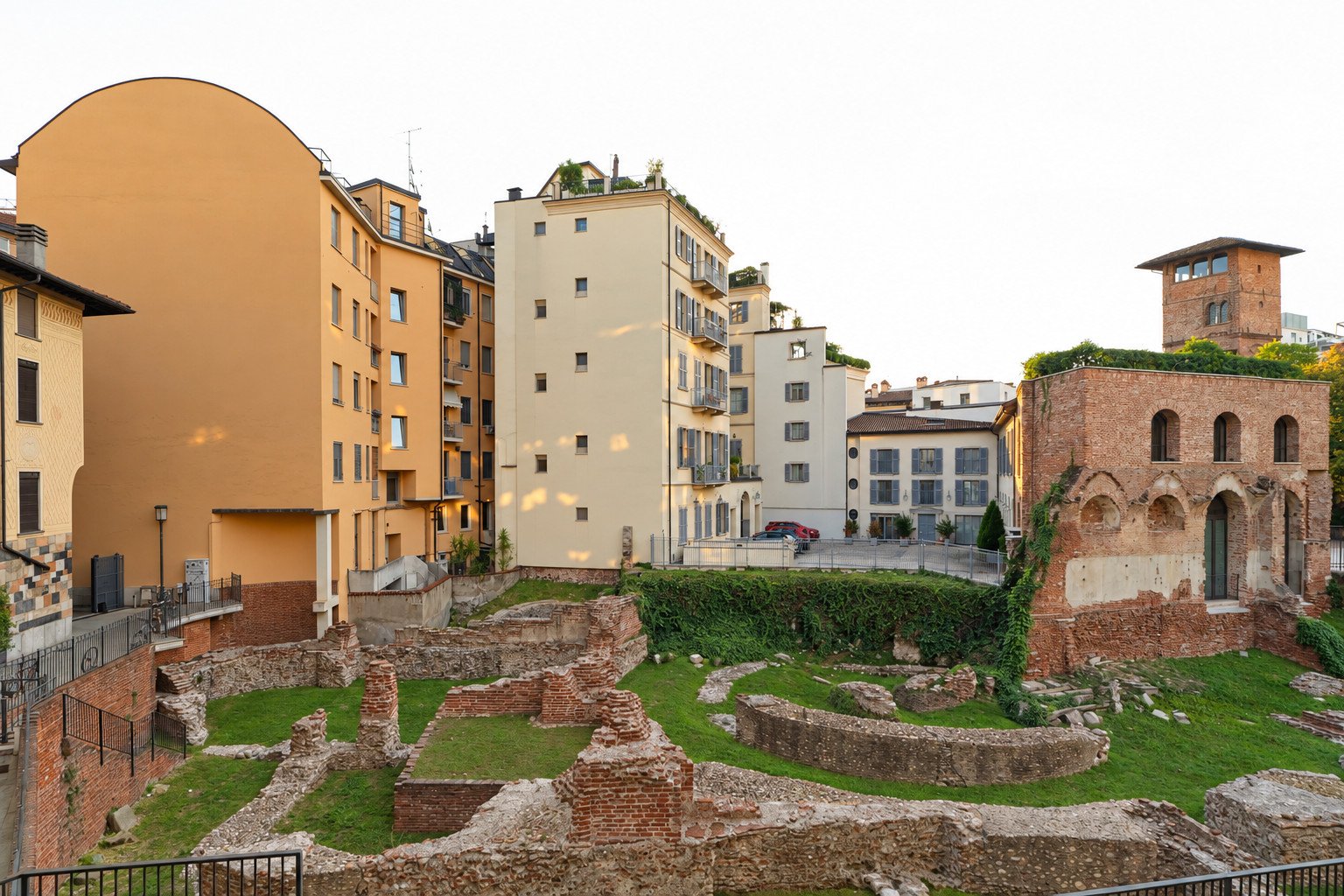
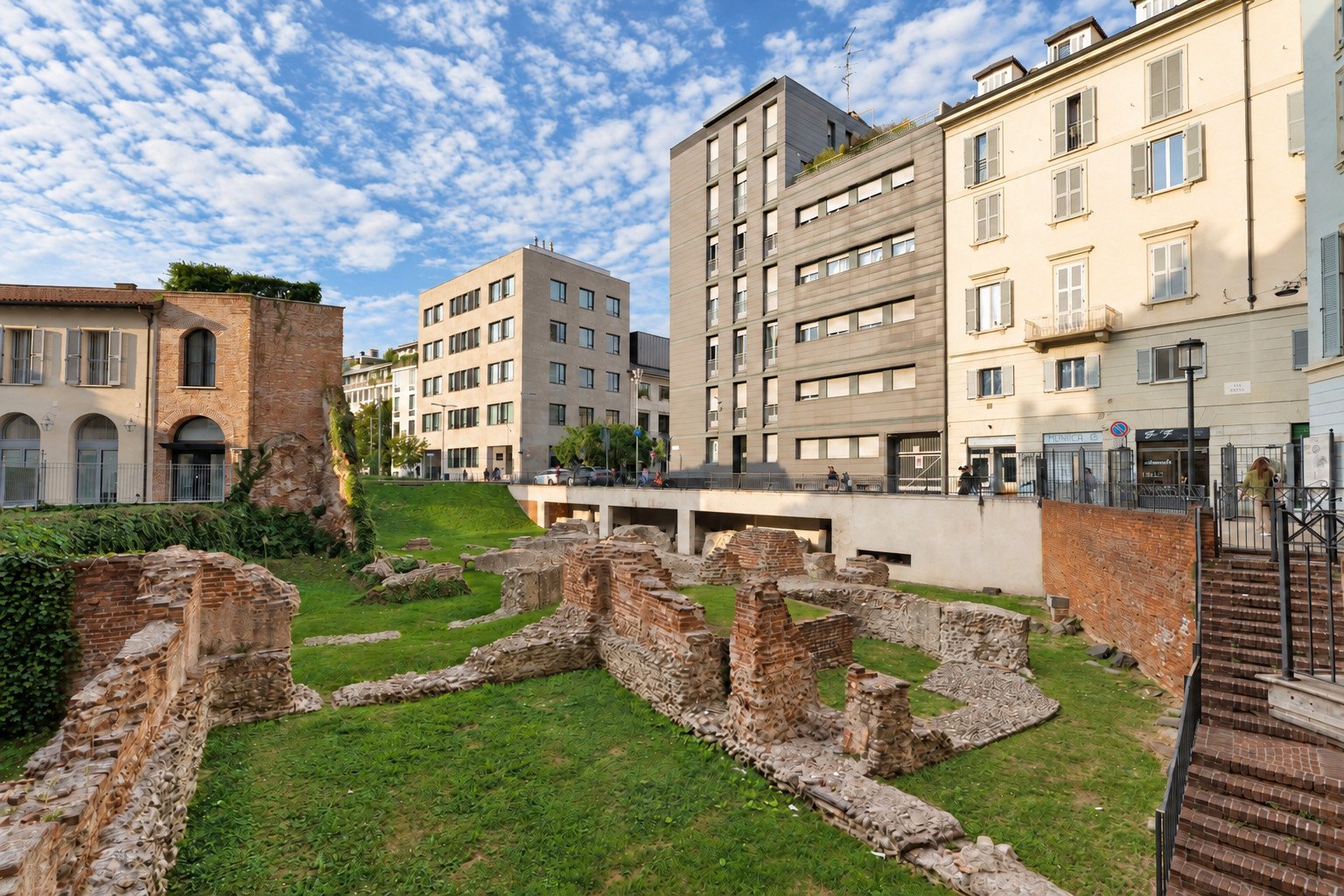
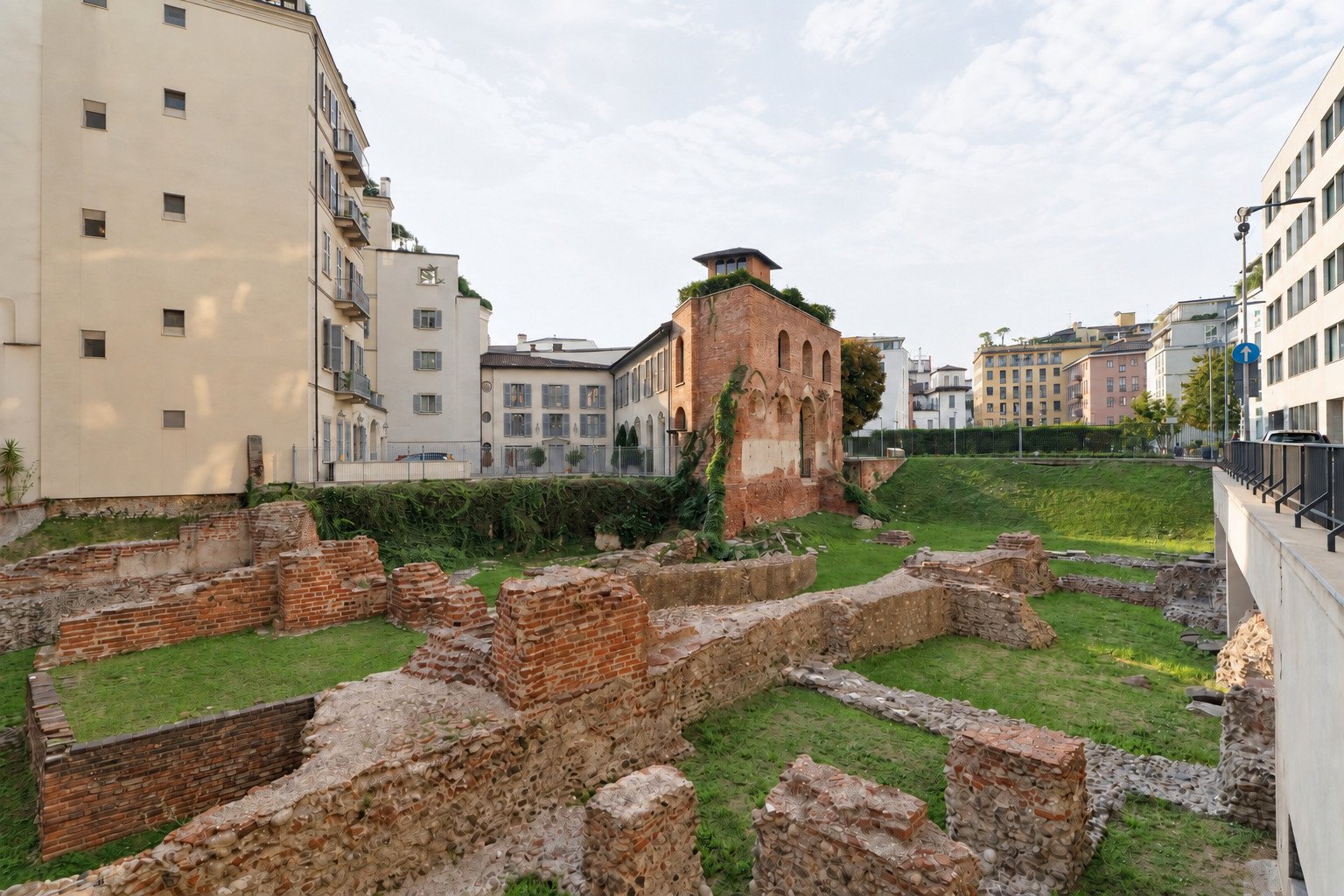
In the heart of Milan’s oldest quarter, Via Brisa lies in a place where almost two thousand years of history coexist just steps from one another. Here stood the great Imperial Palace of Mediolanum, built when Milan was capital of the Western Roman Empire (286 – 402 AD), of which few but important archaeological traces remain today.
But the historic allure of this place does not end there: the Torre dei Gorani tells of medieval Milan, while Palazzo Moriggia, designed by Giuseppe Piermarini, speaks of the noble families of the eighteenth century, and the historic Pasticceria Marchesi, founded in 1824, evokes the Milanese dolce vita.
And then, almost unexpectedly, history gives way to the contemporary: the new Palazzo Gorani, built between 2011 and 2016 by Cecchi & Lima Architetti Associati, redesigned the area, creating an unprecedented public space around the tower and bringing contemporary architecture, Roman ruins and pre-existing medieval structures into dialogue.
Living on Via Brisa thus means finding oneself at the meeting point of Roman Milan, medieval Milan, the city of eighteenth-century palazzi and the contemporary metropolis: a history that, here, is not enclosed in a museum, but surfaces right before one’s eyes.
04 The apartment
A secluded, quiet apartment, in which a simple window becomes a privileged vantage point over the city’s history.
The apartment’s interiors play on the contrast between memory and the contemporary: the original timber beams, exposed brickwork and herringbone parquet preserve the building’s authentic character; the design furniture, the clean-lined kitchen and the black details introduce a contemporary, measured language.
But it is the view that gives the apartment its most distinctive character: to look out of the window is to find oneself, every day, before a layering of centuries. The Roman ruins, set amid greenery and surrounded by the buildings of modern Milan, become an integral part of the domestic landscape, making this apartment a small private space from which to observe, almost in silence, the city changing through time.
05 The artworks
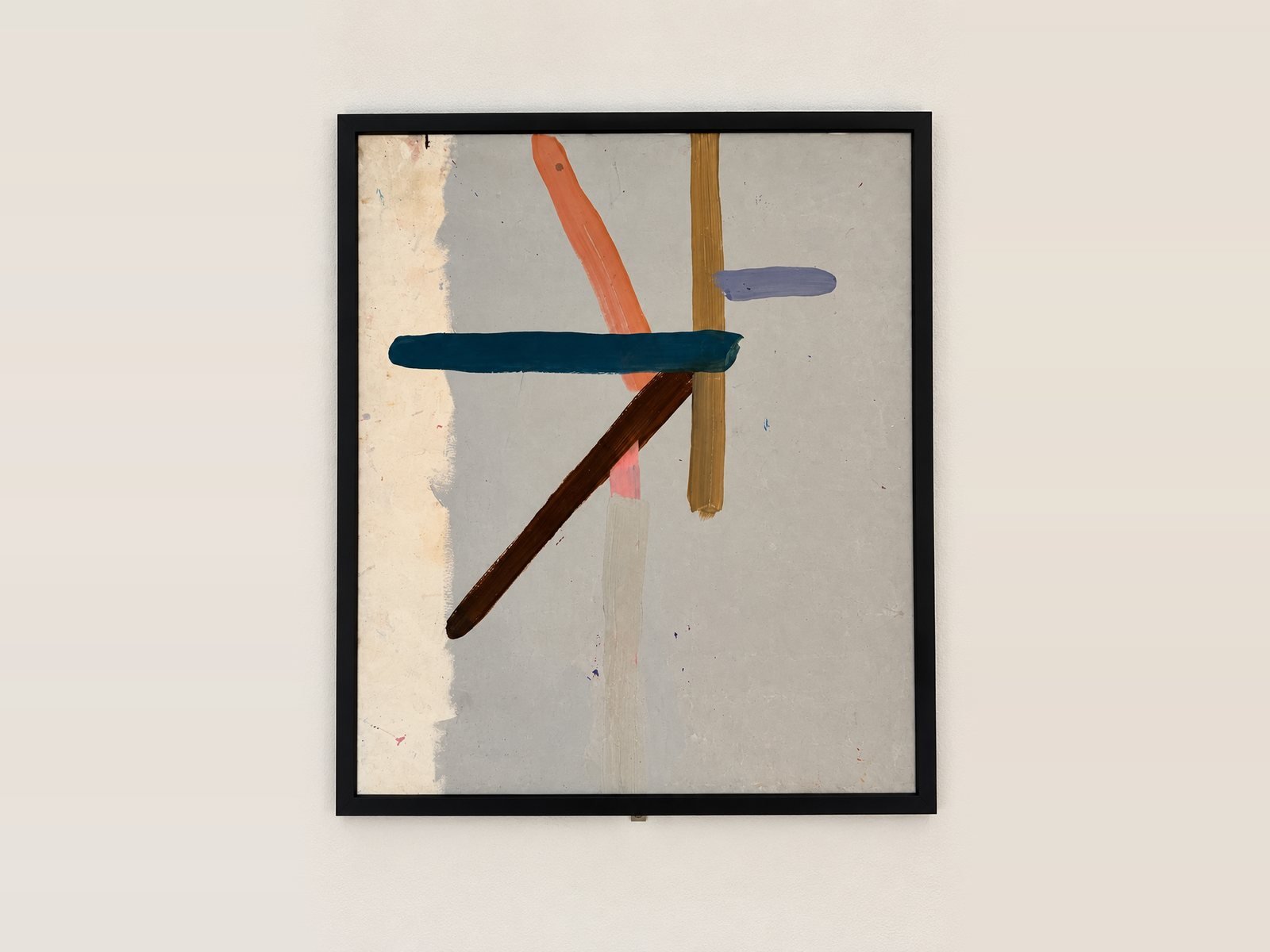
S-t (Untitled), 2023
Oil on paper, 71 × 62 cm
Rubén Guerrero (Utrera, Seville, 1976) is one of the leading exponents of contemporary Spanish abstraction. After studying at the Faculty of Fine Arts in Seville, he developed a body of research centred on the relationship between painting, matter and the construction of space, exhibiting at numerous international institutions and galleries. His work belongs to the tradition of geometric and post-minimalist abstraction, yet stands apart from it through an intensely physical approach to colour: every mark is the result of a considered gesture, in which painting becomes at once surface, object and structure.
In this work Guerrero reduces pictorial language to its essential elements. On a pale, almost impalpable ground, a few bands of colour – light blue, pink, ochre and brown – are arranged, overlapping without merging, like the beams of a temporary construction. The composition appears rigorous, but not rigid: each element seems to seek a stable position while retaining a sense of precariousness. It is precisely this tension, between balance and instability, that forms the core of the work.
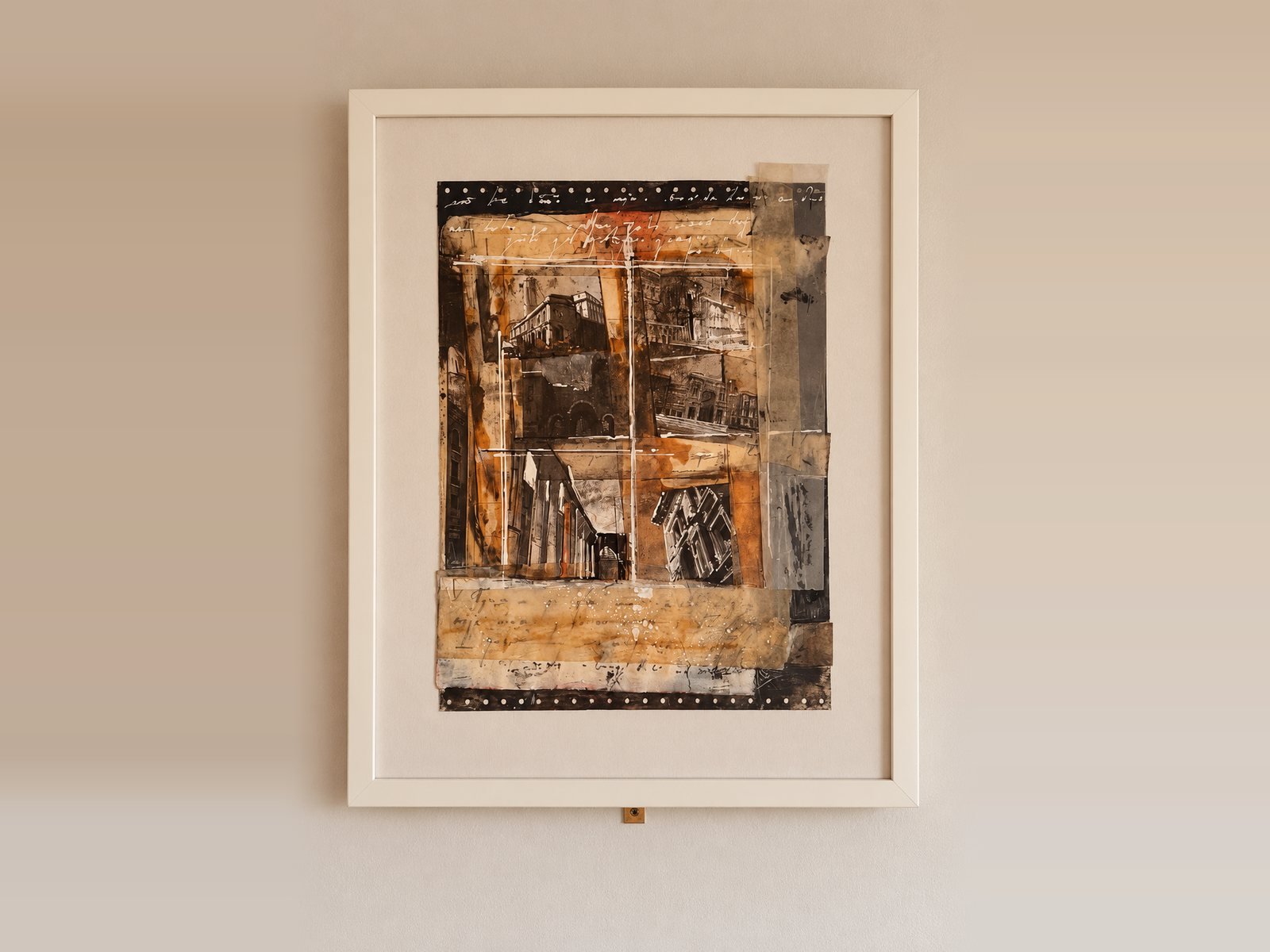
Milano, 2009
Mixed media on paper, 38 × 28 cm
Mihailo Beli Karanović (Serbia, 1980) began studying painting techniques at the age of ten, in the studio of a well-known Serbian artist, and at twenty-one moved to Italy to study Fine Arts at the Brera Academy in Milan. He now lives and works between Belgrade and Milan; he has been painting for more than thirty years and, alongside painting, creates sculptures from reclaimed materials. His work, devoted above all to urban landscapes and portraits, blends contemporary concepts with traditional painting: in his most recent output he sets quotations of Renaissance and Baroque faces beside contemporary botanical elements, in a painting built up in successive layers and with a deliberately limited palette.
In Milano, an early work from 2009, Karanović constructs the city in fragments. On a paper ground marked by grey-blue glazes and ochre stains, a grid of thin white lines divides the composition into four panels, like a window overlooking the urban landscape: among the panels appear some of the city’s emblematic sites, from the Columns of San Lorenzo to the Galleria Vittorio Emanuele II and Porta Ticinese, rendered with a quick, luminous stroke. Perforated black bands close the scene at top and bottom, as if evoking a film strip or a ribbon of notes, while lines of cursive writing, barely legible, cross the sheet in a layered memory of Milan.
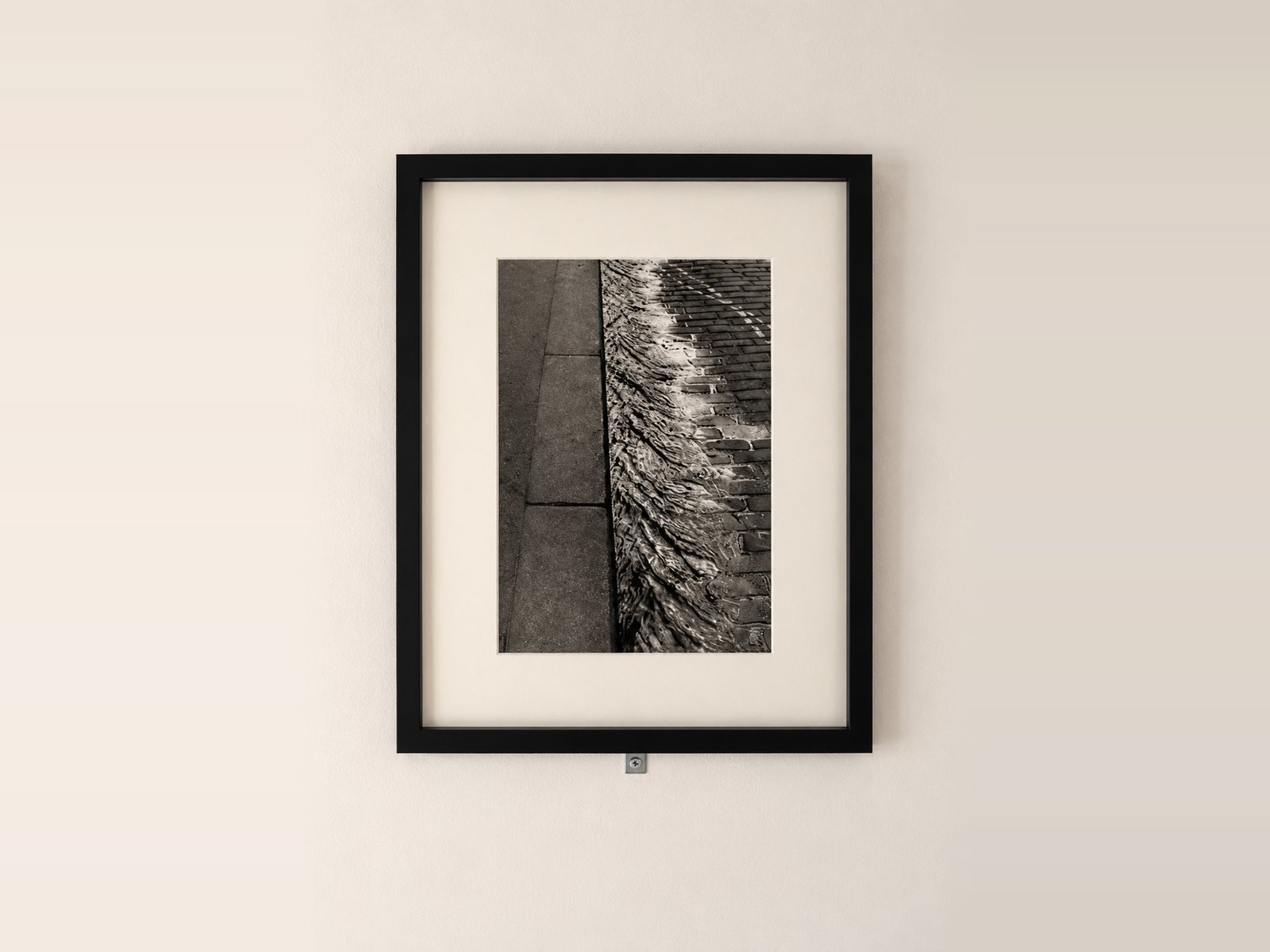
Sidewalk, Paris, 1929
Gelatin silver print
André Kertész (Budapest, 1894 – New York, 1985) was one of the great masters of twentieth-century photography. He began taking photographs in 1912, while preparing for a career in finance, and in 1925 moved to Paris, where he worked as a freelance photographer for European magazines and frequented the artists of the day. In 1928 he bought a Leica, and his work on the streets of Paris had an enormous influence: it combined a photojournalistic interest in movement and gesture with a rigorous attention to abstract form, and was a point of reference for Henri Cartier-Bresson, Robert Capa and Brassaï. In 1936 he emigrated to New York, where he went through difficult years working for magazines (for House & Garden from 1947 to 1962). Having left editorial work in 1962, he devoted himself to personal research, and in the 1970s established himself as a leading figure in art photography. He received a Guggenheim Fellowship and was admitted to the French Legion of Honour.
In Sidewalk, Paris, from 1929, Kertész photographs the glitter of water running along the kerb and turns it into an almost abstract image. The vertical framing, from above and without a horizon, flattens space into a sequence of surfaces: on the left the grey, matt slabs of the pavement, on the right the paving of small regular setts, and in the middle, separating them, the diagonal of the rivulet which, rippled and shot through with light, becomes a dense weave of white reflections and shadows branching across the paving.
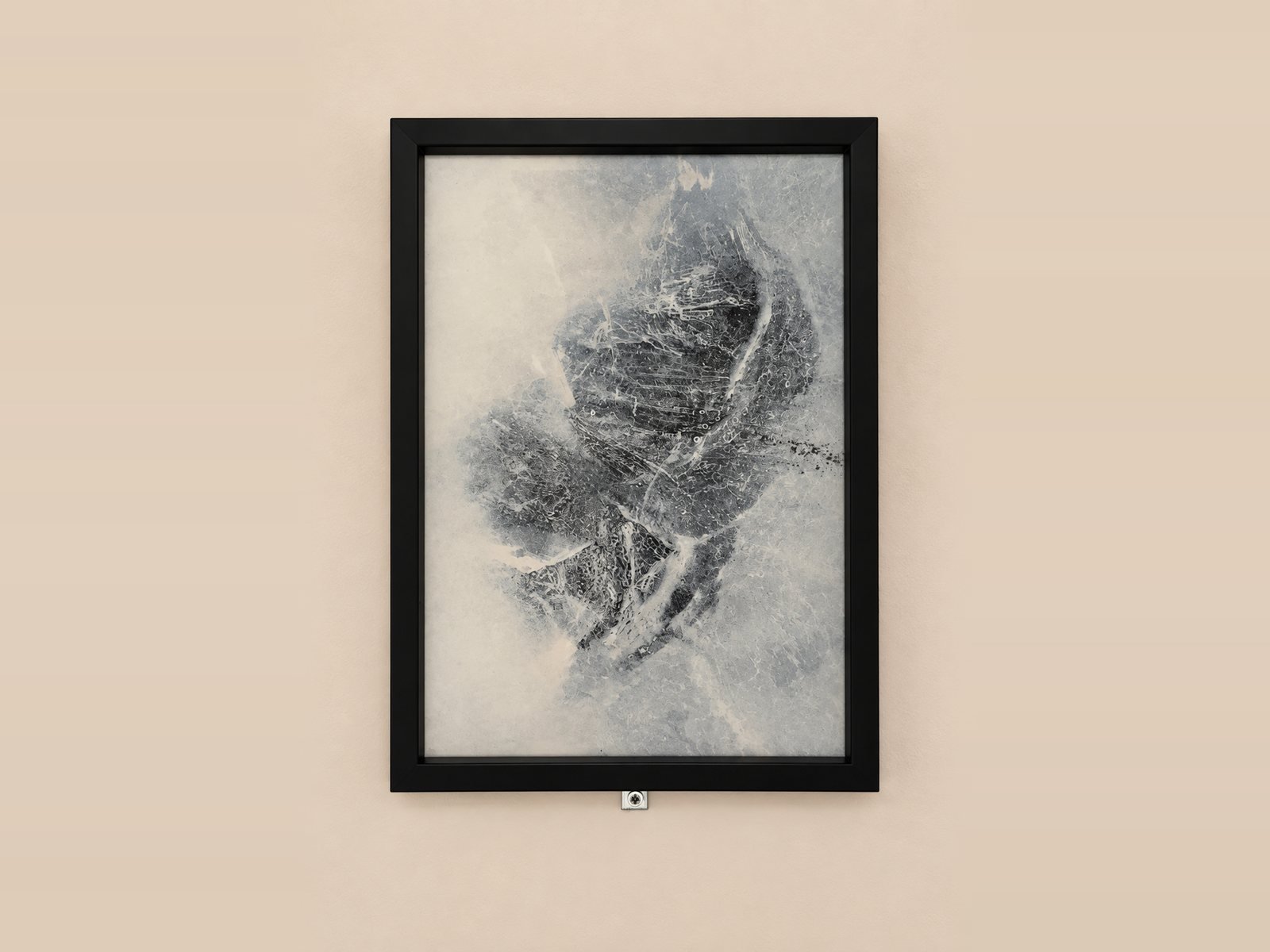
Untitled (from As long as the Sun lasts), 2025
Fine Art print on Hahnemühle Photo Rag Baryta paper
Erica Bardi (Naples, 1998) trained in painting and photography at the Brera Academy of Fine Arts and in photography at the Cfp Bauer in Milan; in 2025 she spent a semester at the Hochschule für Grafik und Buchkunst in Leipzig. Her photographic research combines a material dimension with an editorial one and addresses themes related to the environment and the climate crisis. She won the Liquida Grant in 2023 and 2024, and in 2025 published the artist’s book As long as the Sun lasts with Chippendale Studio.
This work is part of the artist’s book As long as the Sun lasts, published in 2025 with Chippendale Studio: a project developed between 2023 and 2026 that arose from a period of oscillation between numbness and emotional overflow. The artist identifies with comets, a fragment of which she reproduces, which alternate long periods of stasis with bursts of activity depending on their distance from the sun: as long as the sun exists, the comet, and with it the artist, can reawaken and stay alive.
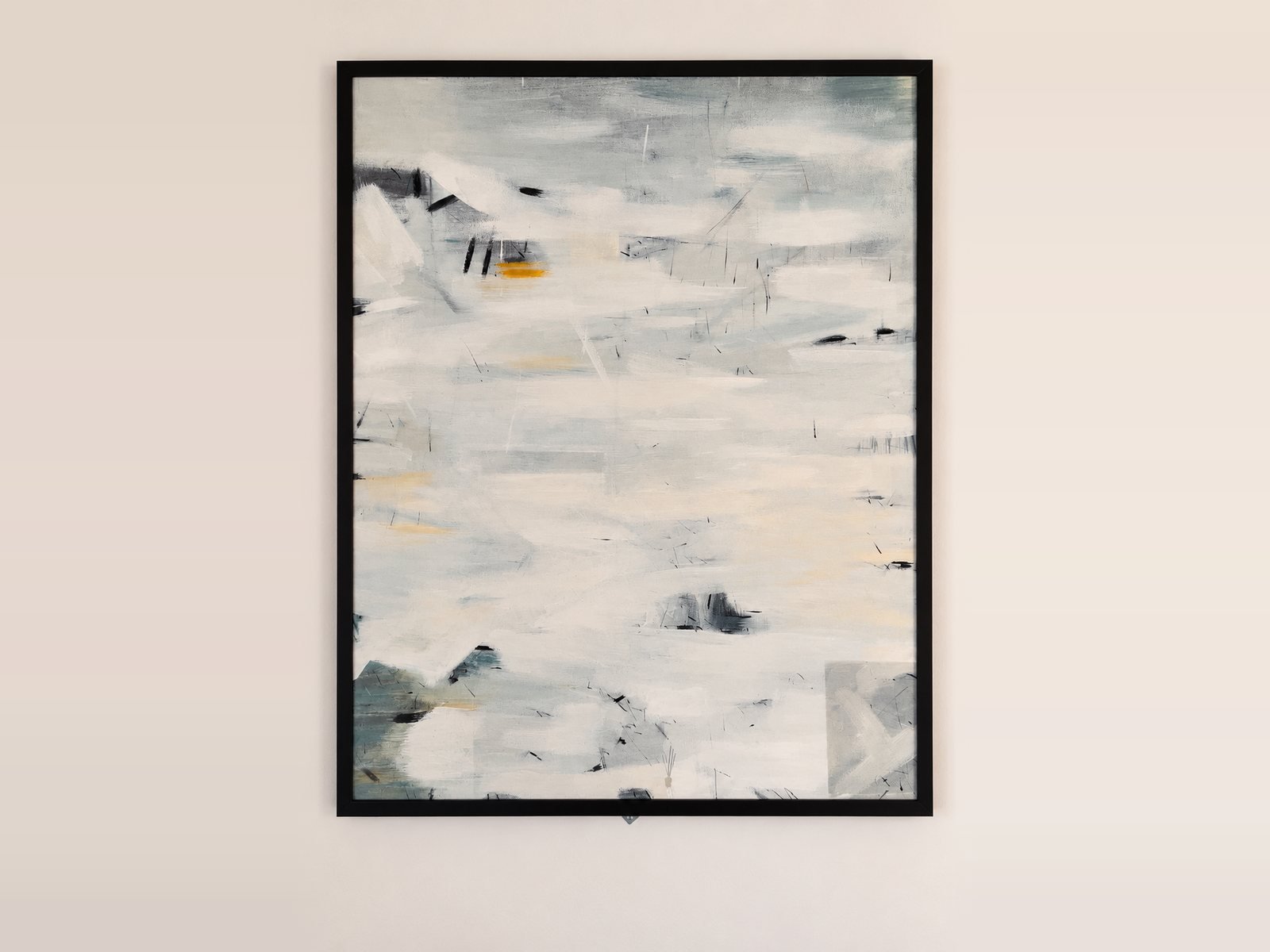
Untitled, 2018
Oil on canvas
Carmen Jiménez Suero (Badajoz, Spain, 1990) trained at the Facultad de Bellas Artes of the Universitat Politècnica de València, where in 2014 she earned the Master in Producción Artística with research devoted to the relationship between painting, gesture and graphic art.
Her research focuses on abstract painting and the painterly gesture, exploring the boundary between mark, matter and space. Her path is marked by a progressive reduction of the image, in which the gesture and the traces left on the surface take on an autonomous value.
Though still young, Jiménez Suero has already received several distinctions in competitions and prizes devoted to contemporary painting: in 2014 she was awarded the Premio de Pintura Segundo Vicente for the project Espacios de Actuación, in 2015 she received the painting award at the JABA competition for the work Morfemas, and in 2018 she was selected among the ten young artists of CALL 20, the emerging-art research programme of the Galería Luis Adelantado in Valencia.
In this work, Jiménez Suero builds an almost monochrome surface, dominated by whites, light blues and greys, on which small traces of colour and dark marks surface. At first sight the image may recall a rarefied landscape, an expanse of water or an atmospheric fragment; yet any possible figurative reference remains deliberately uncertain.
The pale ground tends to dissolve the composition, while the small marks – short brushstrokes, scratches, stains and chromatic concentrations – emerge as residues of something that seems to have been painted, erased and sought out again: it is indeed the gesture itself that becomes the true subject of the work.
The works belong to the private collection living in the apartment.
06 Location
Via Brisa runs alongside the remains of the Roman Imperial Palace, between Corso Magenta and Cordusio: an ultra-central, quiet location minutes from San Maurizio al Monastero Maggiore, the Cinque Vie and the Duomo.
The exact address and access instructions are provided after the request is confirmed.
Move the map with two fingers.
07 Request
Fill in the essential details of your stay. We'll reply via WhatsApp or email with availability, details and conditions.