MAD / 01 — Gio Ponti
Casa Gio Ponti
A jewel of art set within a Milanese palazzo of the fifteenth century.
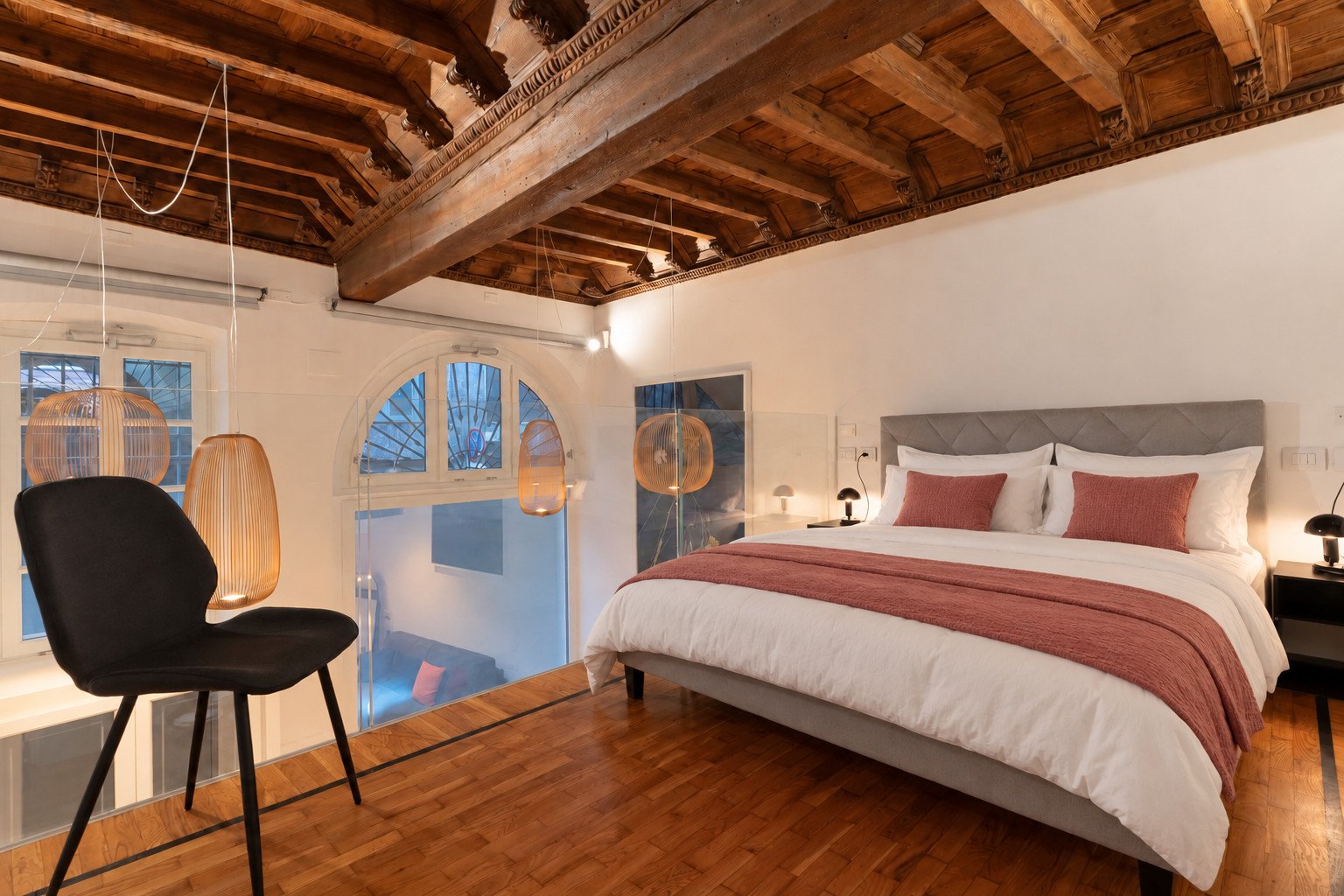
A jewel of art set within a Milanese palazzo of the fifteenth century.
01 Gallery
02 Amenities
 Self check-in
 Wi-Fi
 Coffee corner
 Cleaning
 Wardrobe
 Assistance
 Stay support
 Central location
Main amenities available on request or to be confirmed.
03 The building
A historic palazzo. An authentic experience. The Milan few people know.
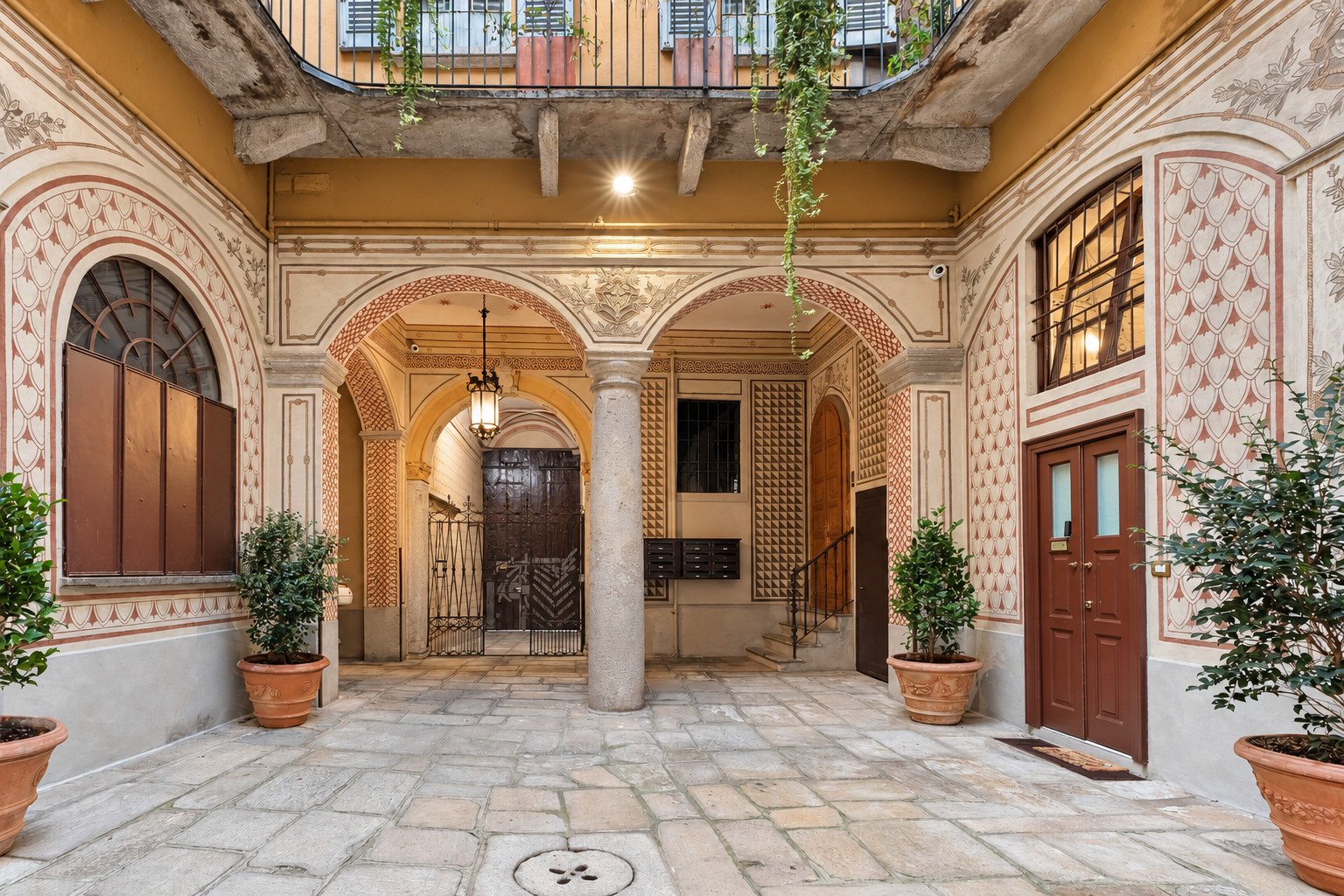
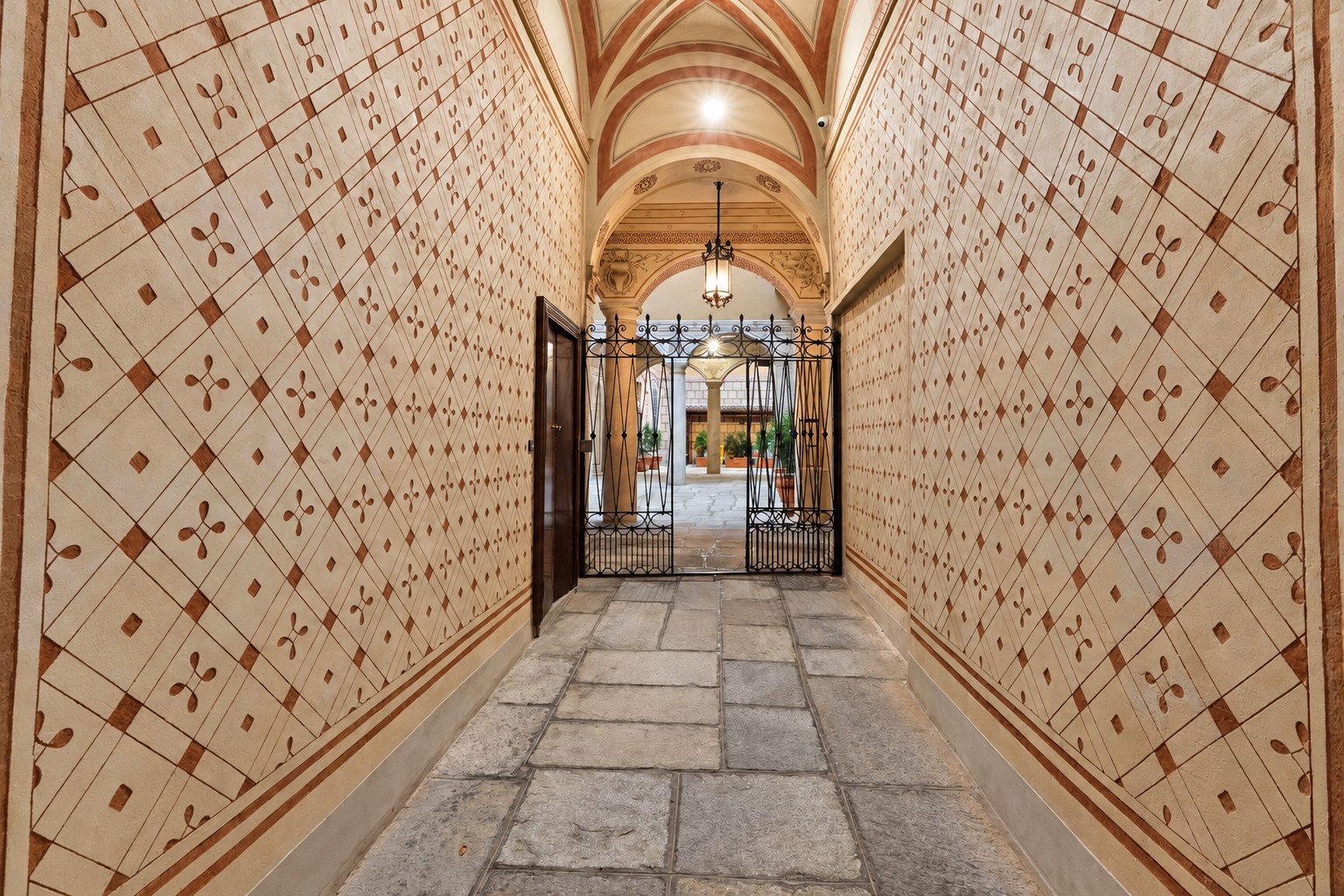
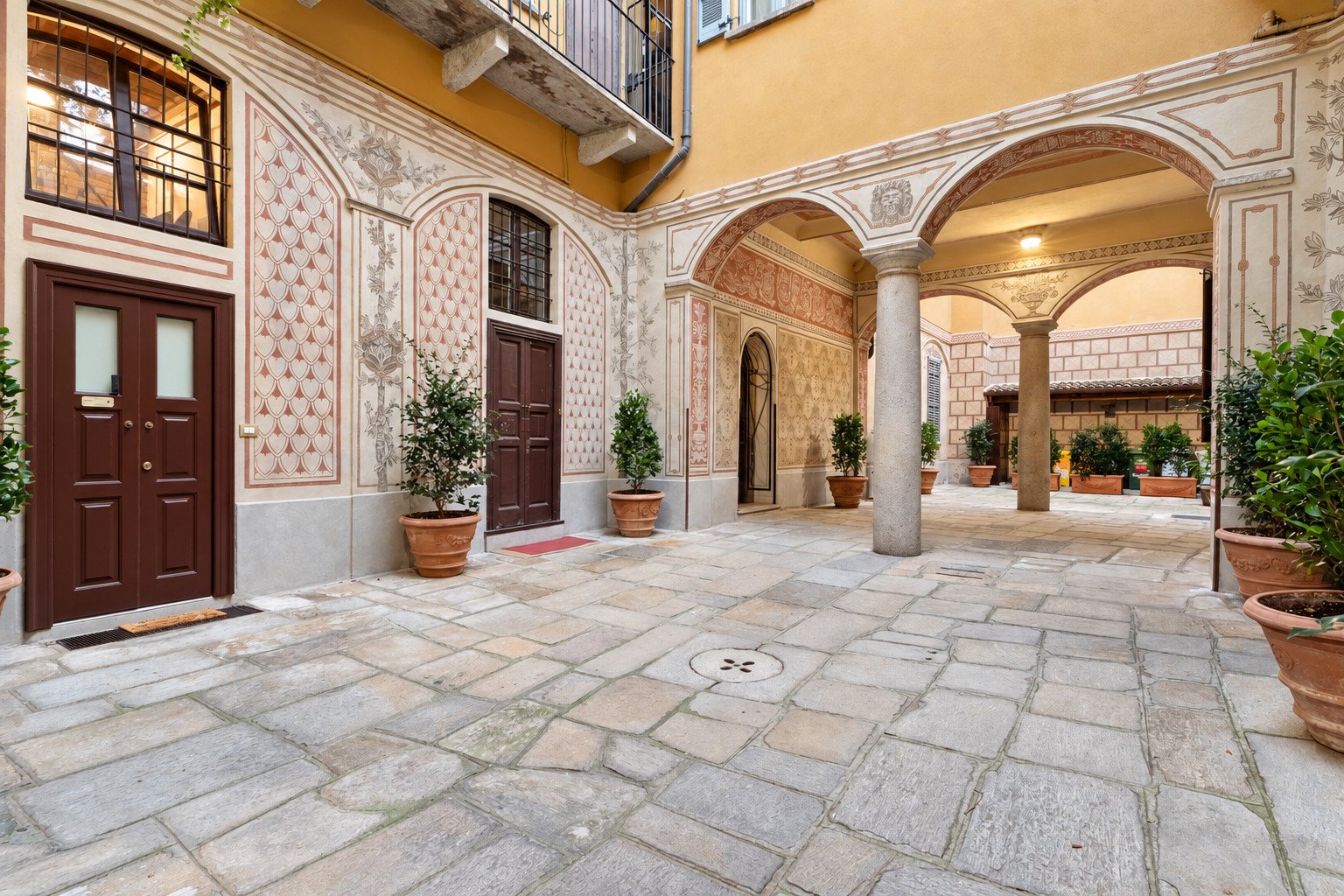
Probably dating back to the fifteenth century, the palazzo stands in the oldest heart of Milan, where the city still preserves rare and precious traces of its medieval and Renaissance history. The vaulted entrance hall, the inner courtyard, Renaissance details reminiscent of the Castello Sforzesco and a highly evocative decorative scheme bear witness to a history layered over the centuries.
Among the building’s most fascinating features are the sgraffito decorations of the inner courtyard, now carefully restored to their full beauty: geometric motifs, grotesques and ornamental interlacing will surprise you the moment you cross the threshold.
Here history is not just something to visit — it becomes part of the stay itself: sleeping in this apartment means experiencing Milan from within, in a rare, authentic place where the city’s past keeps talking to the present.
04 The apartment
Light, proportion and Milanese elegance: the spaces play on geometry and lightness, in dialogue with the historic centre.
The apartment translates Ponti's lesson into a contemporary domestic setting: clean lines, light surfaces and a measured choice of furnishings that let the space breathe.
A few steps from the Duomo and the streets of the centre, it is designed for those seeking a cultured, quiet and deeply Milanese stay.
CIN IT015146B49L47PMD7 · CIR 015146-CIM-13047
Legal information
05 The artworks

Flores silvestre sobre tejido y cristal, 2022
Framed photographic print
David Lerones (Pontevedra, 1983) is a Spanish photographer and artist who lives and works in Valencia. His work centres on conceptual photography and on the image’s capacity to turn ordinary elements into contemplative experiences. Through an extremely controlled use of light, framing and composition, Lerones explores the relationship between nature, matter and perception, giving poetic dignity to everyday objects and fragments.
In Flores silvestre sobre tejido y cristal, Lerones builds a contemporary still life in which wild flowers are isolated against a dark background that amplifies their sculptural presence. The plant subjects, caught at different stages of their life cycle, evoke the theme of transience, while the photographic precision renders every detail with an almost tactile quality. The work is a meditation on time, fragility and the beauty of the ephemeral, an invitation to recognise aesthetic value in what usually goes unnoticed.

Untitled, 2021
Coloured pencil on 160 gsm paper
The Spanish duo Fuentesal–Arenillas, formed by Julia Fuentesal (Huelva, 1986) and Pablo Arenillas (Cádiz, 1989), have worked together since 2012, developing a practice that weaves together sculpture, drawing, performance and installation. Their work explores the relationship between gesture, memory, chance and the transformation of matter: play, the unforeseen and participation become tools for questioning the traditional idea of finished form.
This series of twelve drawings comes from a process in which play and performance precede and generate the image. Each sheet derives from a gesture made by twelve friends of the collector, invited to throw a heavy jute rope some 2.5 metres long into the air: the shape the rope takes as it falls is the starting point of every drawing. The chance gesture is turned into a poetic form, suspended between abstraction and trace; the series as a whole becomes a kind of collective portrait, the poetic documentation of a shared event.

Untitled, 2019
Oil on canvas
A graduate of the Accademia di Belle Arti in Venice, Paolo Pavan (Treviso, 1987) has developed a practice centred on the continuous transformation of the image. Through layers of photography and painting, his works question the stability of the real, bringing forth a universe in which forms and figures seem to appear and dissolve without ever reaching a definitive state.
Untitled, 2019 begins from a photograph entirely reworked through oil paint. The image gradually loses its documentary character and becomes an open perceptual field, where the figure seems to surface and dissolve at the same instant. The dense strokes of colour do not complete the representation, they reveal its continuous becoming.

Besozzi, 2018
Acrylic on canvas
Carmen Jiménez (Badajoz, 1990) is a Spanish artist whose work focuses on painting as a place where memory settles and the image is transformed. Her language, close to abstraction, is built from layers of marks, glazes and erasures that make the traces of time visible.
Made specifically for the collector, Besozzi takes as its central element the historic trademark of his company, founded in 1911. The artist works the canvas with numerous glazes that soften the legibility of the emblem without erasing it: the mark emerges and disappears at once, like an image resurfacing from memory, recognisable yet never fully defined.

La forma celata – 1, 2009
Lead sheet and pigment on board
One of the leading figures of contemporary Italian art, since the 1990s Umberto Mariani has pursued a body of work centred on the “concealed form”, in which drapery becomes the distinctive element of his language. Using modelled and painted lead sheets, the artist turns a heavy, rigid material into surfaces that look like soft fabrics, in constant dialogue between reality and illusion.
The work gives up any descriptive function to focus on the relationship between what is visible and what remains hidden: the drapery does not reveal a body, it merely suggests its presence. Light slides over the metal surfaces, heightening relief and shadow, while the monochrome reinforces the essential character of the composition.

Collage poubelle, 2003
Collage on canvas, methacrylate
Florentine (Rosenheim, 1978) and Alexandre (Le Coteau, 1980) Lamarche-Ovize are a French artist duo who have worked together since 2006, with a multidisciplinary practice spanning drawing, printmaking, ceramics, textiles and installation, inspired by the plant and animal world, natural history and scientific illustration.
The title — literally “rubbish collage” — refers to the practice of salvaging materials and images destined to be thrown away and turning them into a new visual narrative. Photographic cut-outs, fields of colour and different textures overlap in a layered, luminous imaginary landscape; the transparency of the methacrylate amplifies the depth of the composition.
The works belong to the private collection living in the apartment.
06 Location
Via dei Piatti lies in the historic centre, between Carrobbio and Cinque Vie: a quiet, secluded location a short distance from the Duomo, the Quadrilatero and the main transport lines.
The exact address and access instructions are provided after the request is confirmed.

Move the map with two fingers.
07 Request
Fill in the essential details of your stay. We'll reply via WhatsApp or email with availability, details and conditions.