MAD / 03 — Portaluppi
Casa Portaluppi
A small jewel box, quiet and private, in the heart of Milan.
Booked nights are crossed out

A small jewel box, quiet and private, in the heart of Milan.
Booked nights are crossed out
01 Gallery
02 Amenities
 Self check-in
 Wi-Fi
 Coffee corner
 Cleaning
 Wardrobe
 Assistance
 Stay support
 Central location
Main amenities available on request or to be confirmed.
03 The building
In the heart of Corso Magenta, a discreet palazzo guards the memory of historic Milan. A central, quiet address where the cultured city reveals itself in the details.
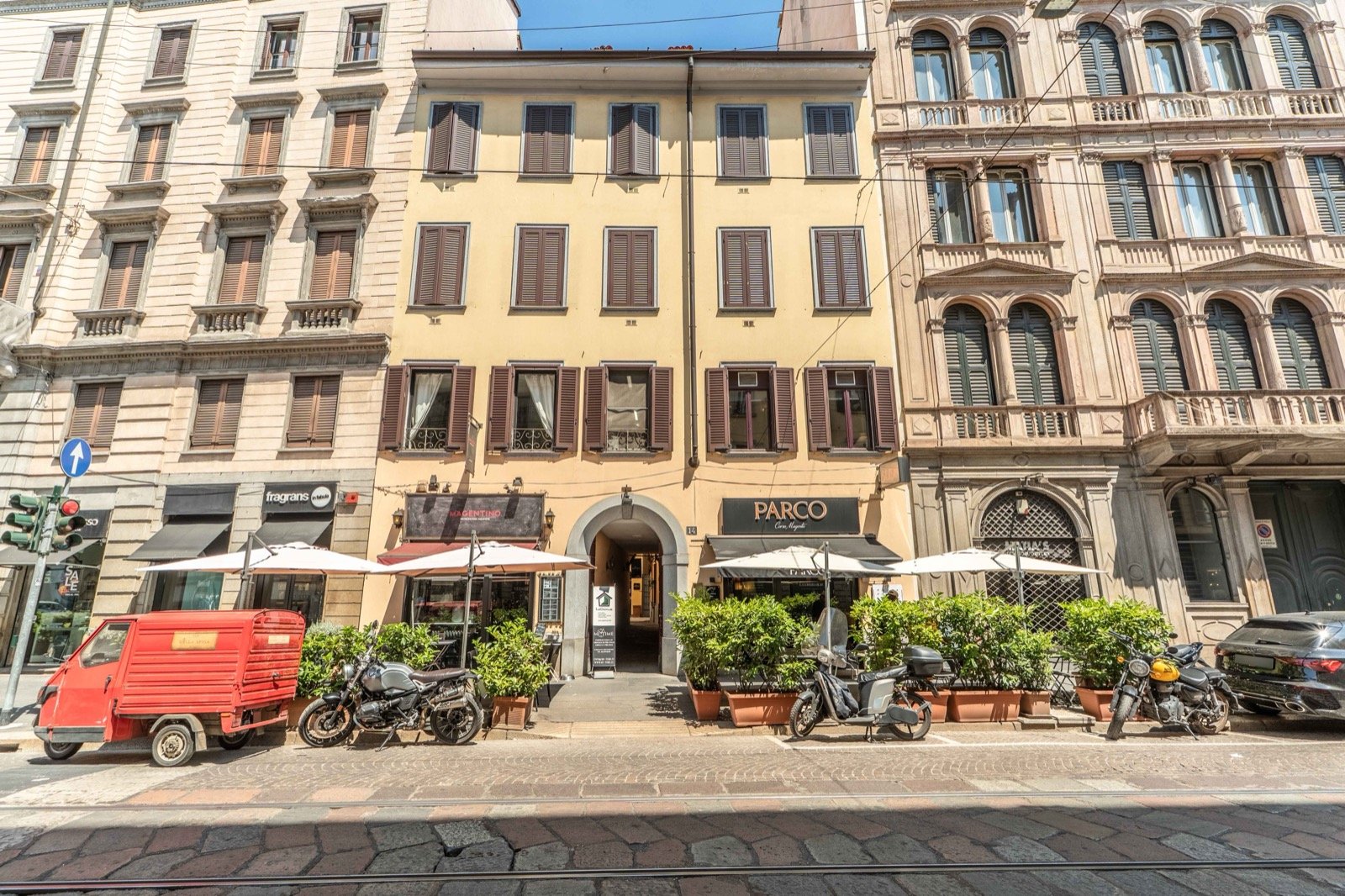
Documented since at least the nineteenth century, the palazzo preserves the sober, reserved character of the Milanese bourgeois residence: a discreet street presence, businesses on the ground floor and a more intimate, silent dimension towards the inner courtyard.
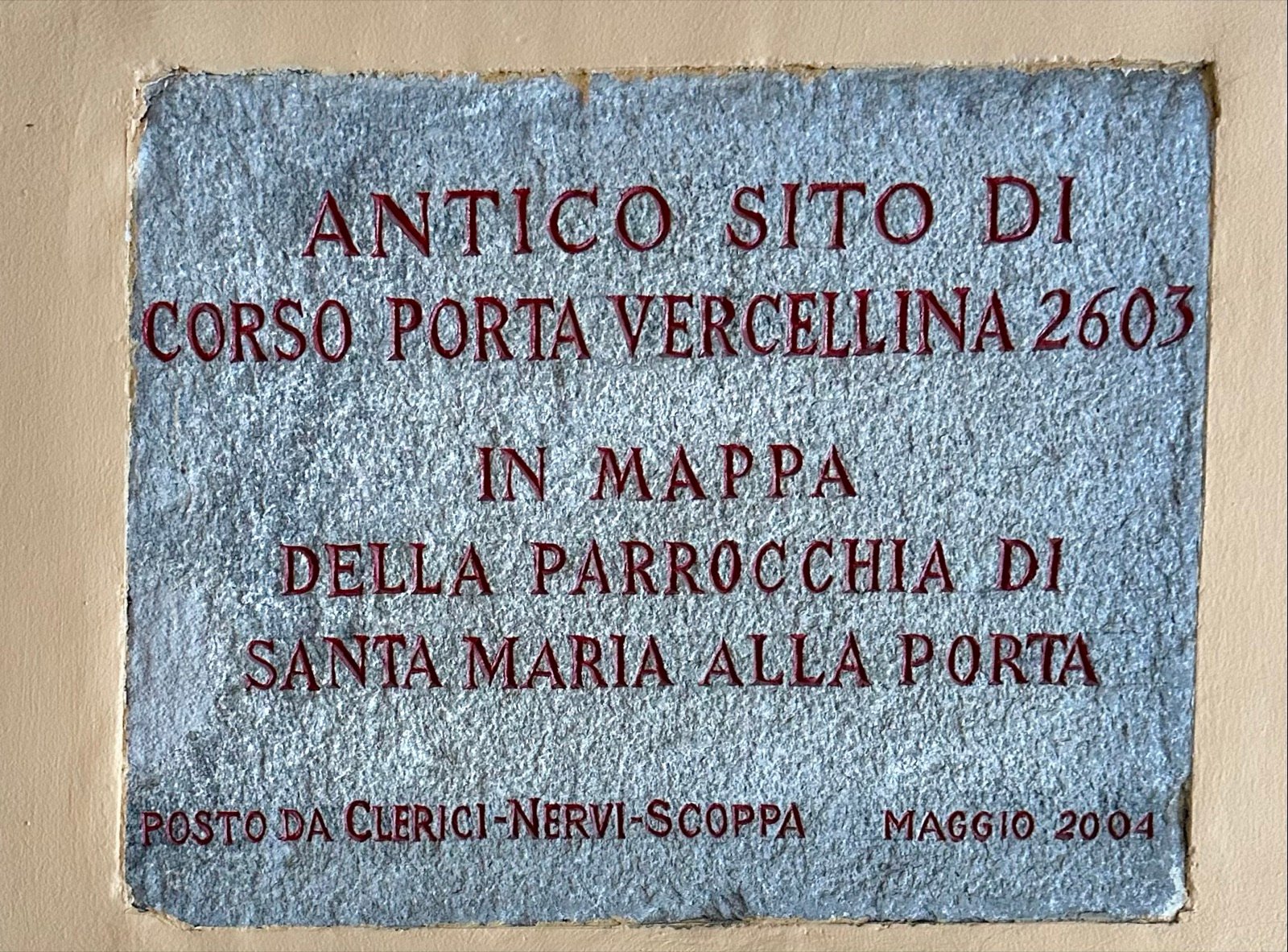
A plaque in the entrance hall reveals a precious trace: before the current numbering, the building corresponded to the old Corso di Porta Vercellina no. 2603 (the numbering system introduced by Maria Theresa of Austria), within the parish of Santa Maria alla Porta. An 1866 Milanese guide confirms its correspondence with today’s number 14.
The palazzo thus sits in a deeply layered piece of the city, between Santa Maria alla Porta, Palazzo Litta, San Maurizio and the Castle area: a central, cultured, sedimented Milan, where even a seemingly ordinary street number preserves precise traces of its own history.
04 The apartment
Perspective, detail and unconventional elegance: the space surprises with geometric cuts and crafted light.
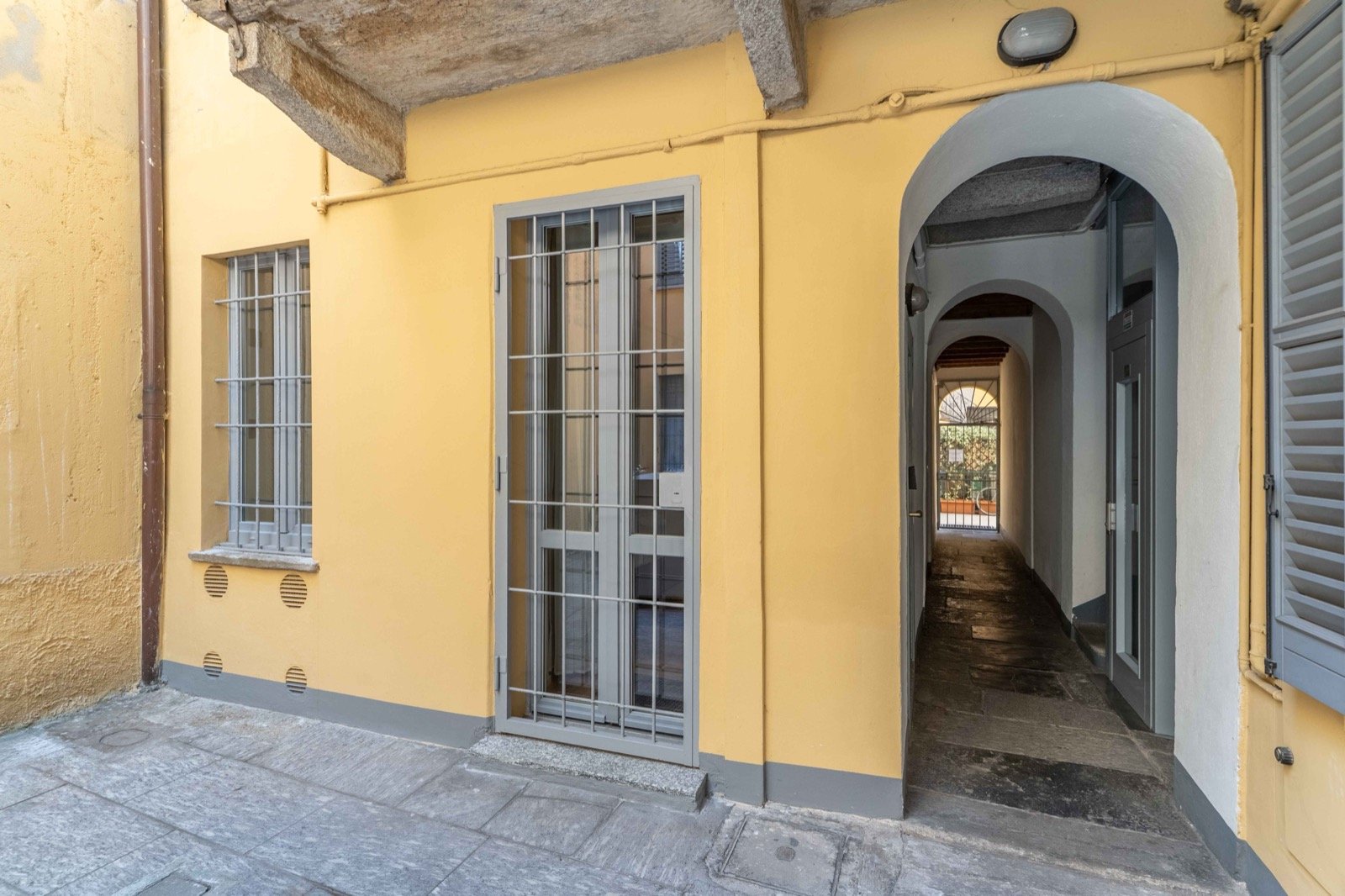
A small, elegant and silent refuge in the very centre of Milan, steps from some of the city’s artistic jewels (San Maurizio al Monastero Maggiore, Palazzo Litta, the Roman Forum and the Castello Sforzesco). Overlooking an inner courtyard, the studio offers a private, peaceful dimension — perfect for living the city from a strategic position without giving up the quiet.
The spaces are compact but carefully considered, in a successful balance of function and refinement. The wooden ceiling and exposed-brick details tell the building’s story, while precious materials (parquet and marble), custom furniture and the clean lines of the kitchenette create a contemporary, essential, refined setting. A compact studio, complete with everything.
CIN IT015146B4ZY53HAYQ · CIR 015146-CIM-12882
Legal information
05 The artworks
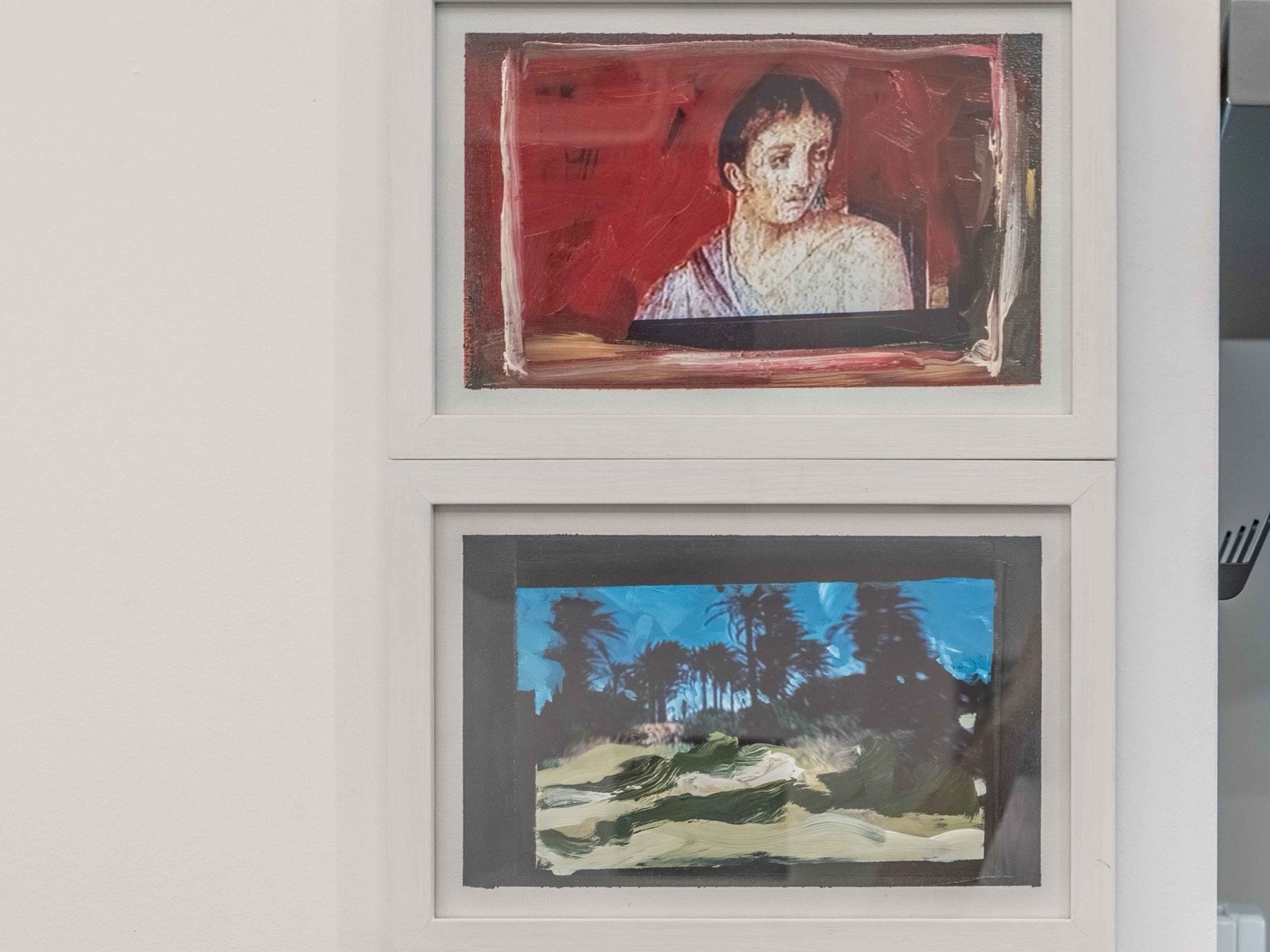
Untitled, 2008 · Untitled, 2008
Mixed media: photographic print with oil painting interventions
Trained between Rome and Switzerland, in the 1990s Mirko Pagliacci (Lausanne, 1959) worked at length with Mario Schifano, becoming his assistant. His own language is built on layers of photographs, painted interventions and glazes that turn everyday images into fragments of memory suspended between reality and abstraction.
In the first work, a tropical landscape is reworked with glazes of colour that evoke sand dunes: the real place becomes a vision suspended between memory, perception and imagination. In the second, the photographic reproduction of an ancient Roman fresco is altered by painted interventions recalling a film frame: a temporal short circuit between archaeology and contemporary art.
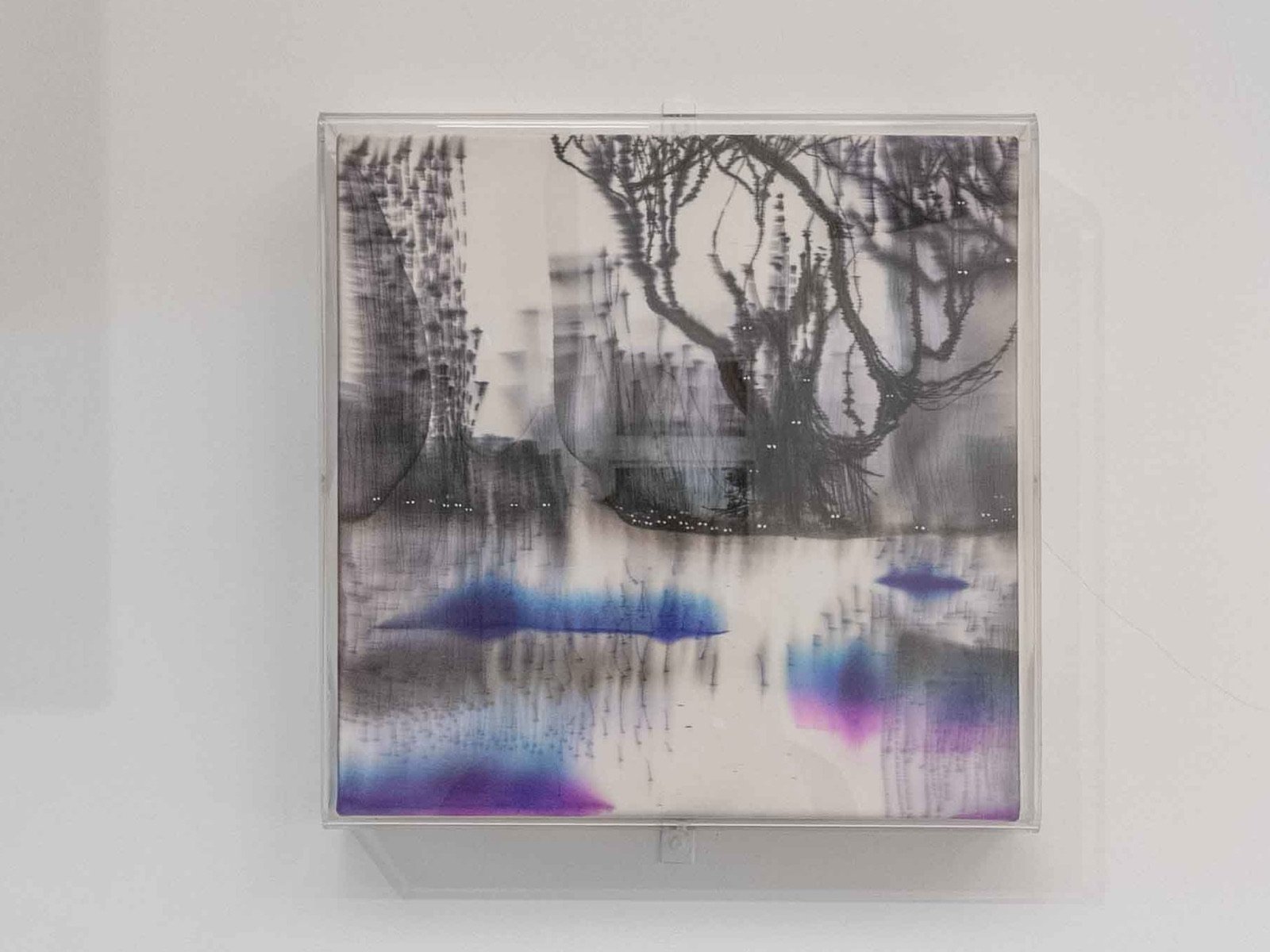
Regno Iperboreo, 2007
Ink on silk
Daniele Giunta (Palermo, 1974) is an Italian artist whose work moves between photography, painting and experimentation with materials, favouring suspended atmospheres in which the landscape becomes a mental space.
Regno Iperboreo evokes the myth of Hyperborea, the legendary land at the edge of the known world. The ink, absorbed by the weave of the silk, dissolves the outlines of the image and creates a rarefied landscape in which trees and vegetation emerge as evanescent presences immersed in a milky light.
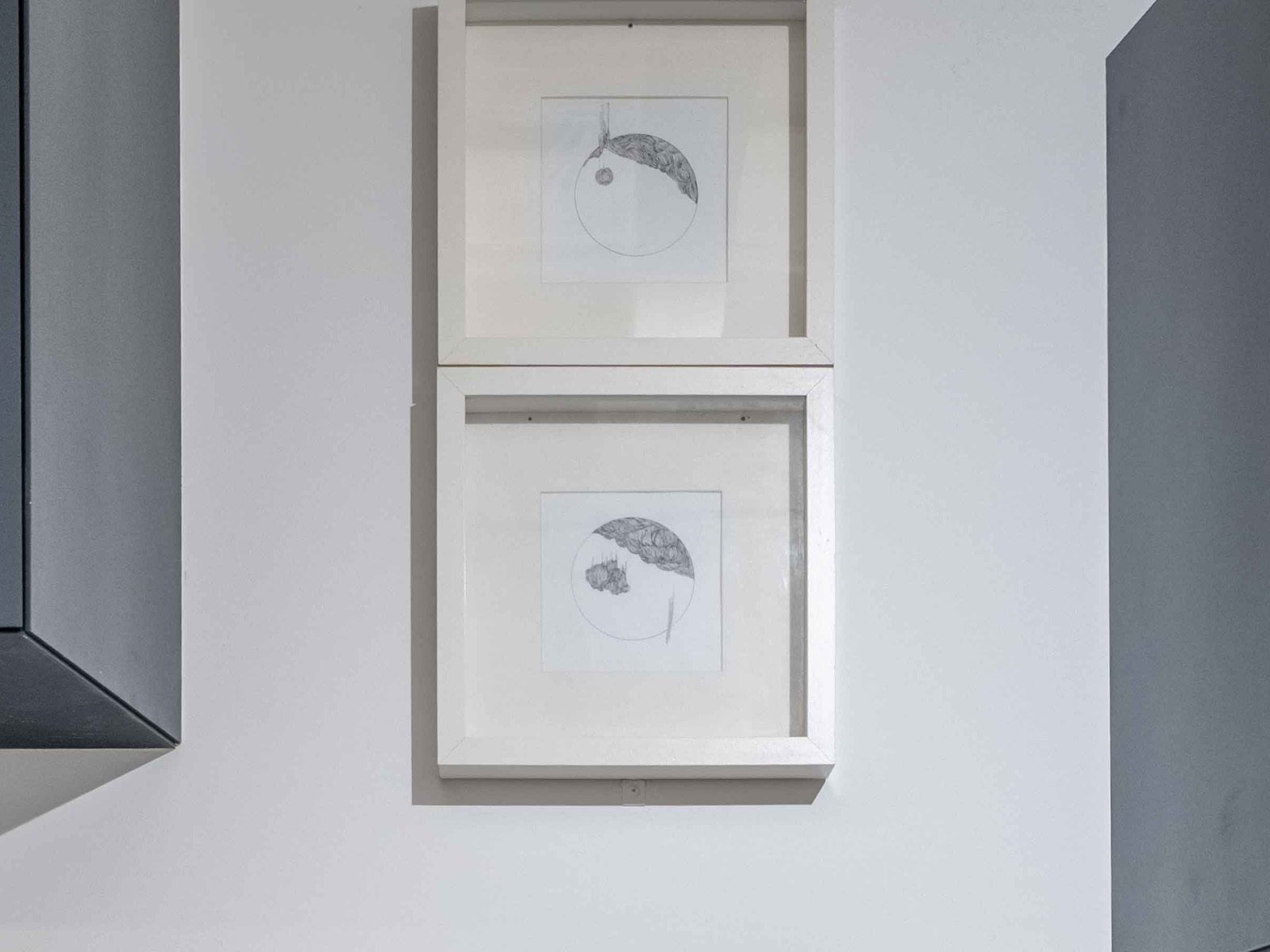
Untitled, 2006 · Untitled, 2006
Indian ink and pencil drawing on paper
The artist LOLO belongs to a generation of authors whose work is built on the mark and on the construction of mental landscapes, with a meticulous handwriting achieved through the obsessive repetition of the line.
In these two small works the landscape is concentrated inside a circle, as if observed through a lens or enclosed in a memory. The contrast between the density of the line and the wide white surface gives the image a contemplative character; the very small scale invites close observation, turning the drawing into a small universe to be explored slowly.
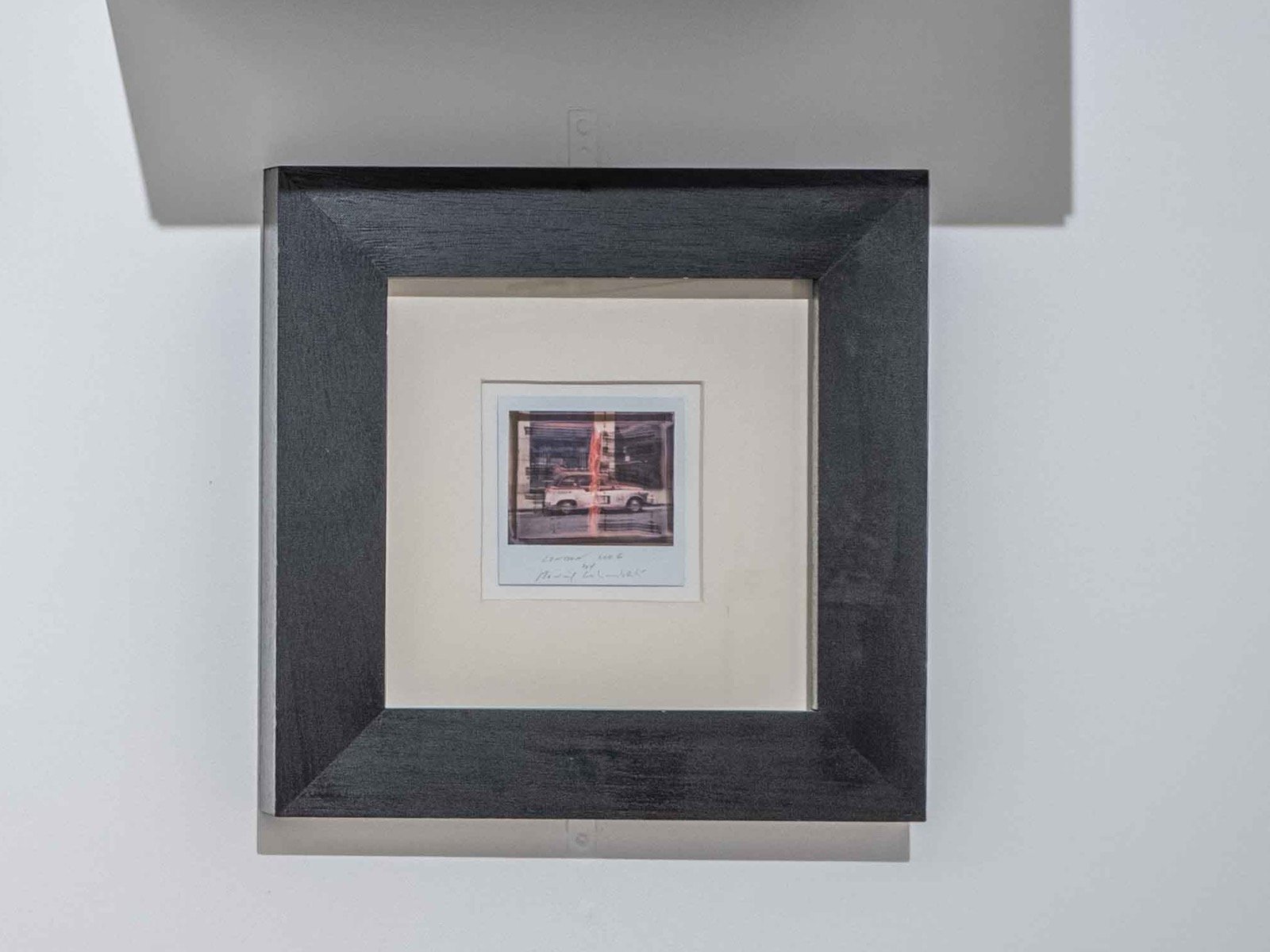
Untitled, n.d.
Polaroid
Maurizio Galimberti (Como, 1956) is one of the best-known contemporary Italian photographers, famous for his use of instant Polaroid photography, turned from a means of immediate reproduction into a tool of artistic research.
In this snapshot the very qualities of the emulsion — softness of the image, a slight loss of definition, colour casts — turn the photograph into an almost painterly surface. The overlapping light and the faint blur dissolve descriptive precision in favour of a more evocative perception.
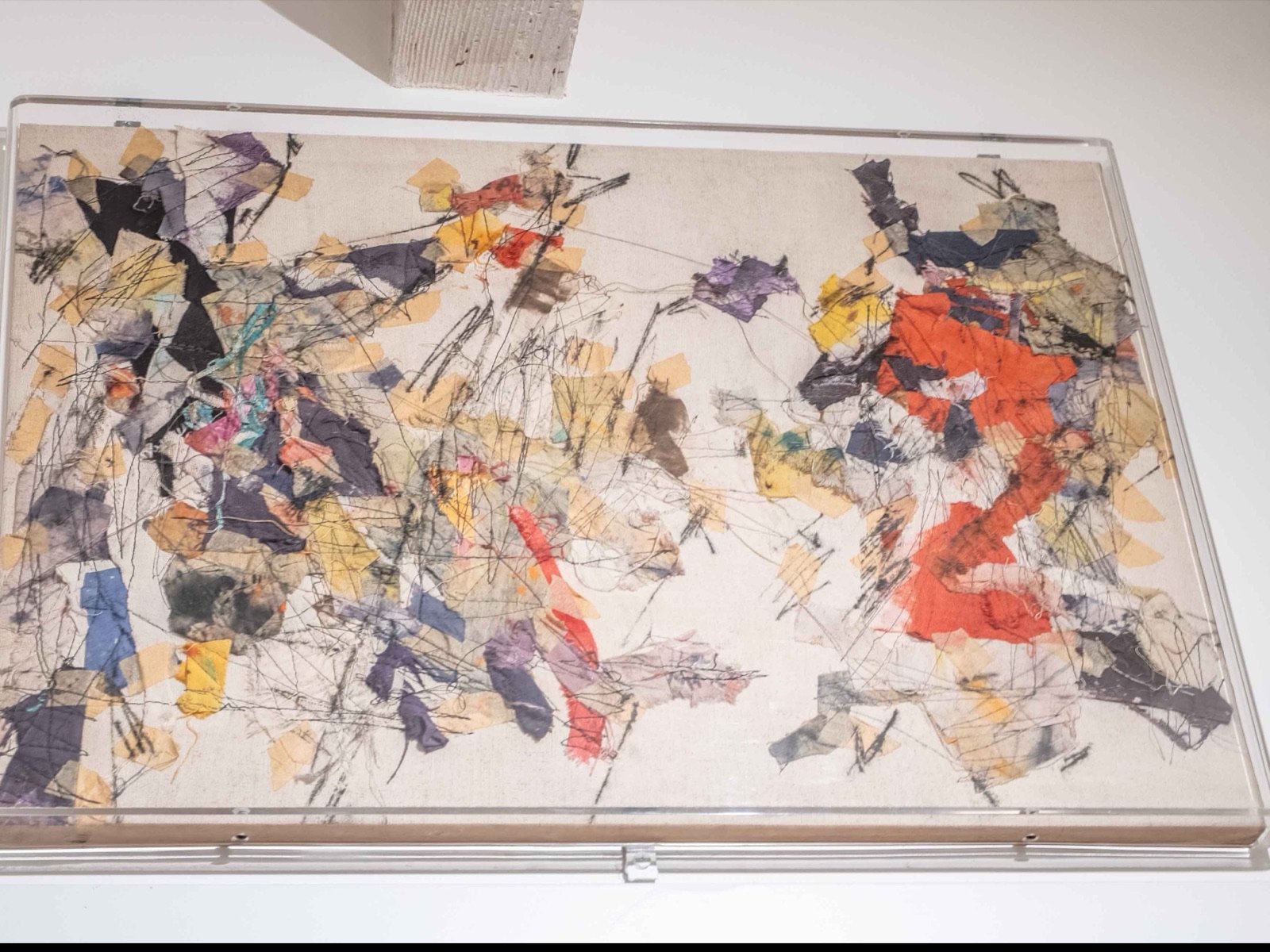
Quantità URUTU, 1995
Mixed media on canvas
Sandro Martini (Livorno, 1941 – Milan, 2022) was one of the freest and most lyrical figures of Italian abstraction in the second half of the twentieth century. At the core of his work lies the idea that painting should not merely decorate a surface, but become total space, architecture and breath — as in his celebrated environmental installations in Italy and the United States.
Quantità URUTU unhinges the two-dimensionality of the canvas and turns it into a three-dimensional, vibrating space. “Quantità” is not to be understood mathematically, but as an accumulation of chromatic energy, material thickness and visual memories; the word “URUTU” acts as a poetic magnet, evoking a primitive nature charged with underground tension.
The works belong to the private collection living in the apartment.
06 Location
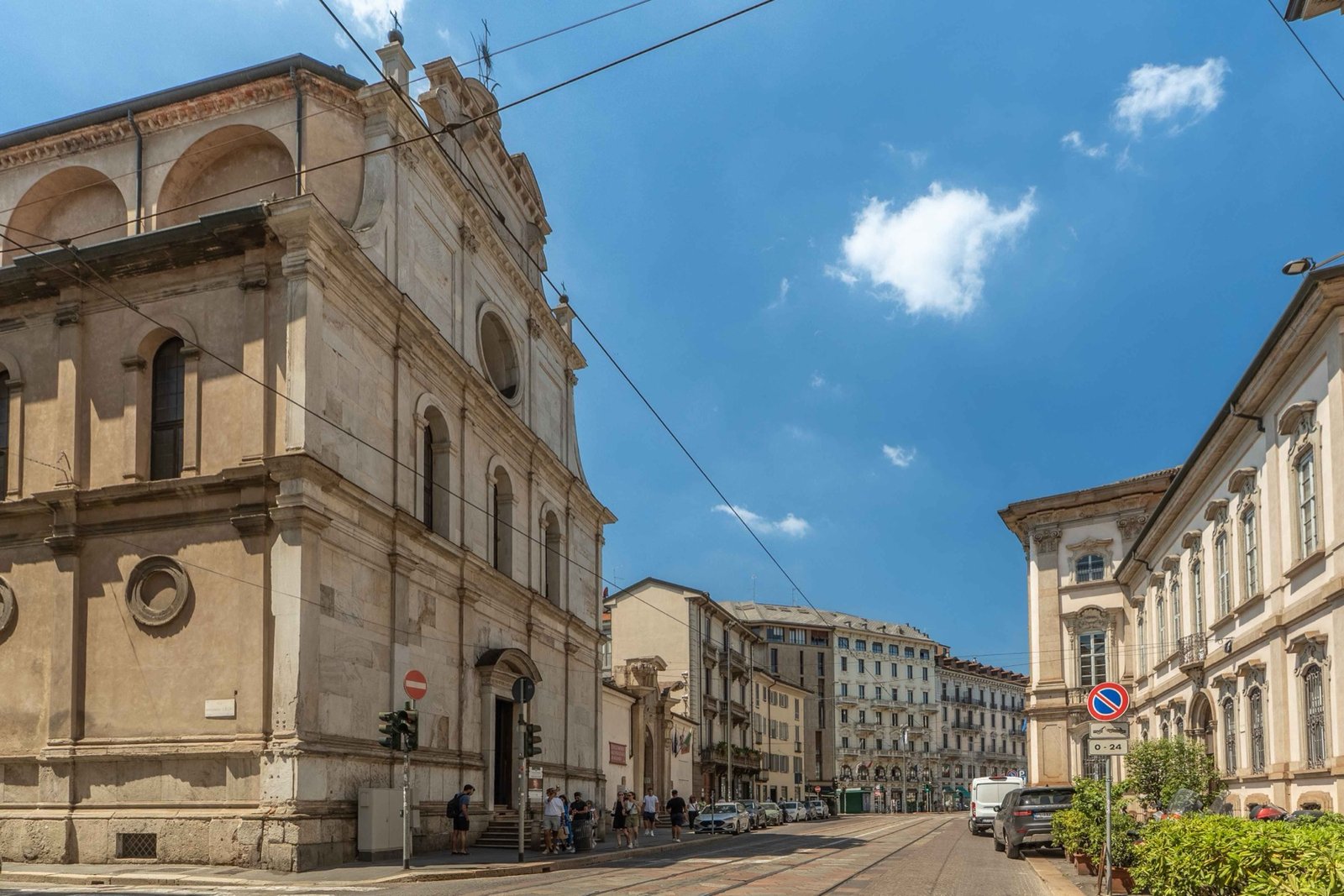
Corso Magenta is one of the most elegant streets in the centre: steps from Santa Maria delle Grazie and the Last Supper, the museum district and Cinque Vie, and well connected to the rest of Milan.
The exact address and access instructions are provided after the request is confirmed.
Move the map with two fingers.
07 Request
Fill in the essential details of your stay. We'll reply via WhatsApp or email with availability, details and conditions.